


Natural Stone vs Porcelain Paving: Which Should You Choose?
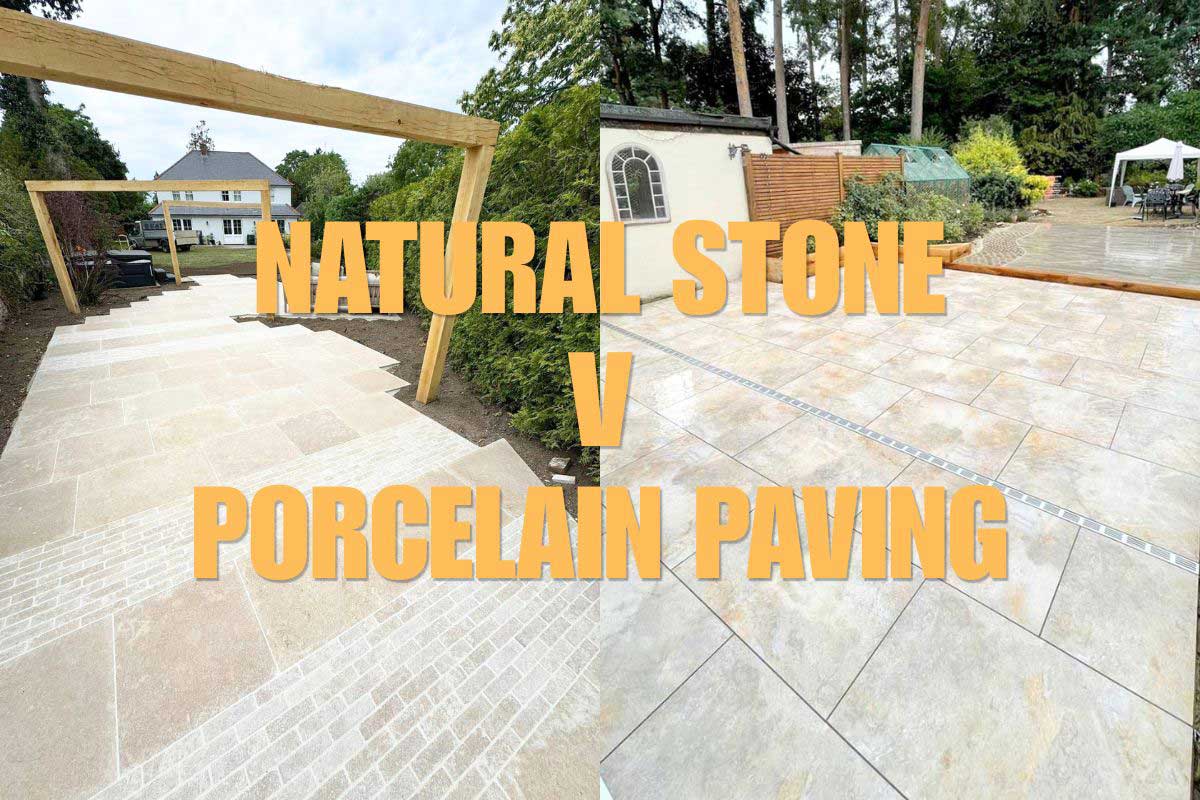
Choosing the right paving material is a key part of any patio project, and for many homeowners it comes down to natural stone vs porcelain paving. Both materials are widely used, look great when installed properly and offer different advantages depending on your priorities.
The challenge is that there is no single right answer for every garden. Some people prefer the natural look and individuality of real stone paving, while others want the cleaner finish and lower maintenance of porcelain slabs. Understanding how both compare will help you make the right decision for your space.
This guide explains the main differences between natural stone and porcelain paving, including the pros and cons of each, and how to decide which is best for your project.
What is the difference between natural stone and porcelain paving?
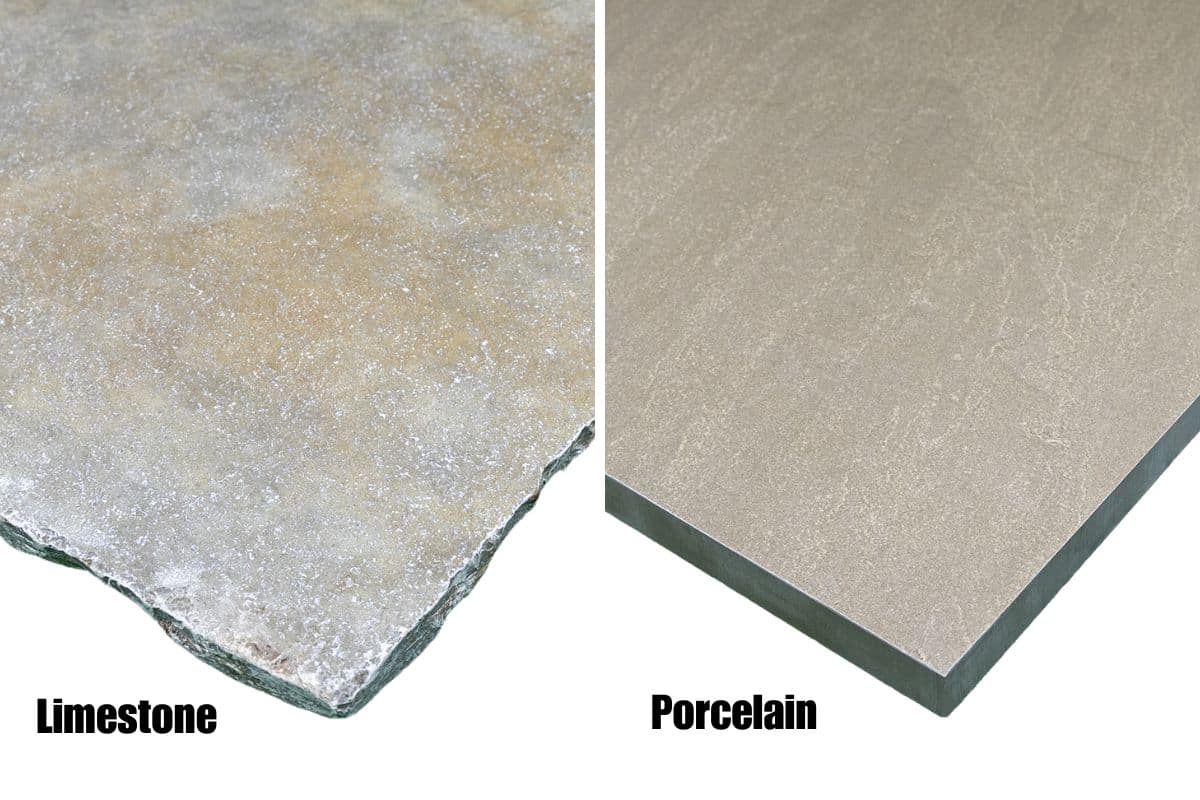
The key differences when comparing natural stone v porcelain paving come down to material differences, how they look once installed and the type of care each requires.
Natural stone paving forms naturally, is quarried from the ground and cut into slabs, meaning every piece is unique. Variations in colour, texture and natural markings are part of its appeal, creating a more organic, less uniform finish across your patio. Even within the same pack, these subtle differences provide a softer aesthetic with natural character.
At Love Stone, our natural stone paving range includes a wide selection of Indian sandstone and limestone paving, in choice of natural tones. Together, these materials offer everything from rustic, riven textures to smoother, more refined finishes, depending on the look you’re aiming for.
Porcelain paving, by contrast, is a manufactured product made from refined clays, sand and minerals that are fired at extremely high temperatures – like porcelain tiles. This process creates a dense, low-porosity slab with consistent sizing, colour and finish, resulting in a cleaner look once laid. The colour and pattern are printed onto the slabs; therefore, porcelain paving is available in a wide range of styles, including designs that replicate natural stone, wood and metallic finishes. A key attraction of porcelain paving for some people is that it is extremely durable and does not require sealing, making it very easy to maintain.
Natural stone paving pros and cons
Benefits of natural stone paving
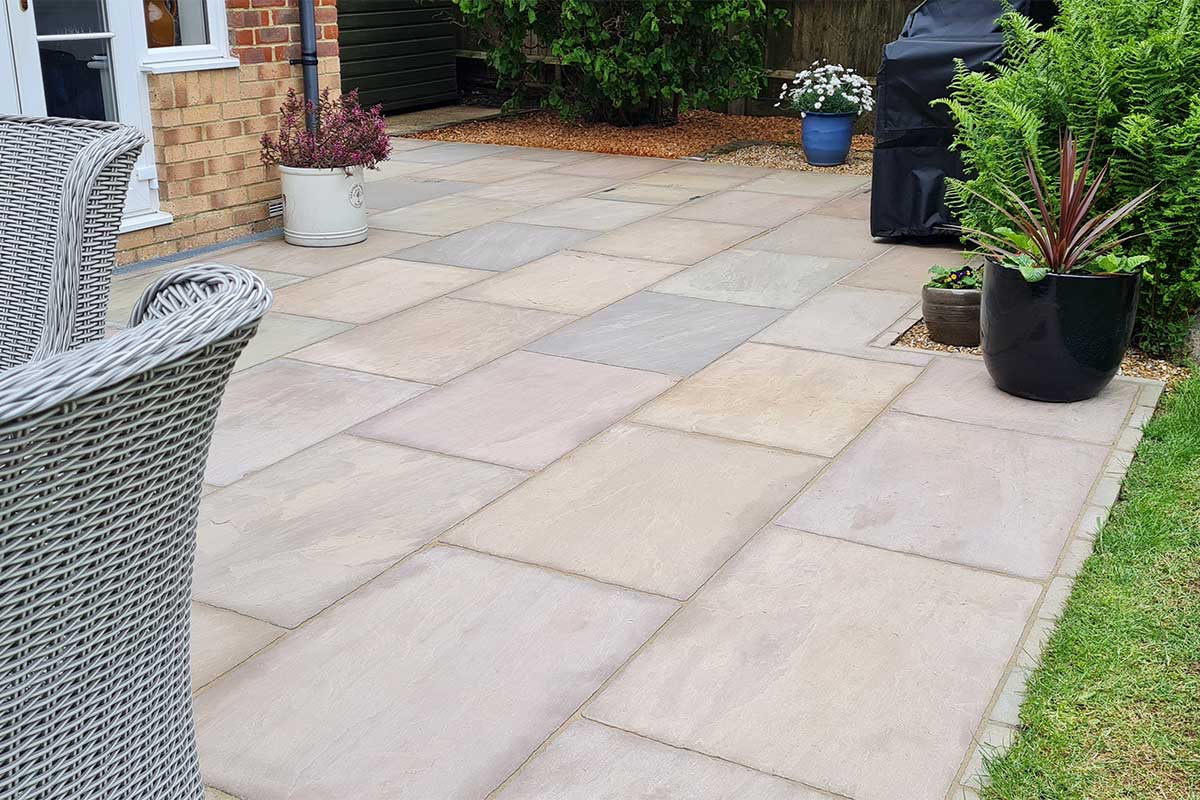
Natural stone remains one of the most popular paving choices because of its character and versatility. No two slabs are exactly the same. Natural colour variation, veining and texture create a more rustic look and give stone patios a timeless appeal. This makes it ideal for more traditional homes and gardens. It also complements features like stone walling, rockeries, edging and decorative aggregates, helping to create a cohesive outdoor space.
With natural stone, you’ll have a wide choice of styles to choose from. Indian sandstone is a popular all-rounder, offering a textured surface and warm tones such as buffs, greys and browns. Limestone provides a smoother finish that works well with modern and traditional properties. Choose lighter shades to brighten your space or darker tones for a more contemporary feel.
Natural stone is also strong and long-lasting. When installed correctly, it can withstand regular foot traffic and changing weather conditions for decades. Over time, your stone paving may also develop a natural patina, which many homeowners find adds to its charm.
Disadvantages of natural stone paving slabs
Because of its natural variation, achieving a completely uniform patio can be more difficult, particularly in larger spaces. While this is part of the material’s appeal for many, it may not suit those looking for a clean, consistent look – in which case porcelain may be more suitable.
Natural stone is also porous, so sealing is recommended to help protect against moisture, staining and common issues such as algae or black spot. With the right care, natural stone paving is durable and easy to maintain, but it does mean a little more ongoing maintenance compared to porcelain. You will need to clean and reseal natural stone paving every 2-3 years depending on the type of stone.
It’s also worth noting that the calibration and quality of natural stone can vary between suppliers. This can affect both its appearance and ease of installation, which is why it’s important to buy from a specialist. At Love Stone, with over 50 years of experience importing and supplying stone, you can rely on us to provide high-quality materials that are built to last. All our natural stone paving is calibrated to 20mm or 22mm thickness and is sourced by us direct from the best quarries globally.
Porcelain paving pros and cons
Advantages of porcelain paving
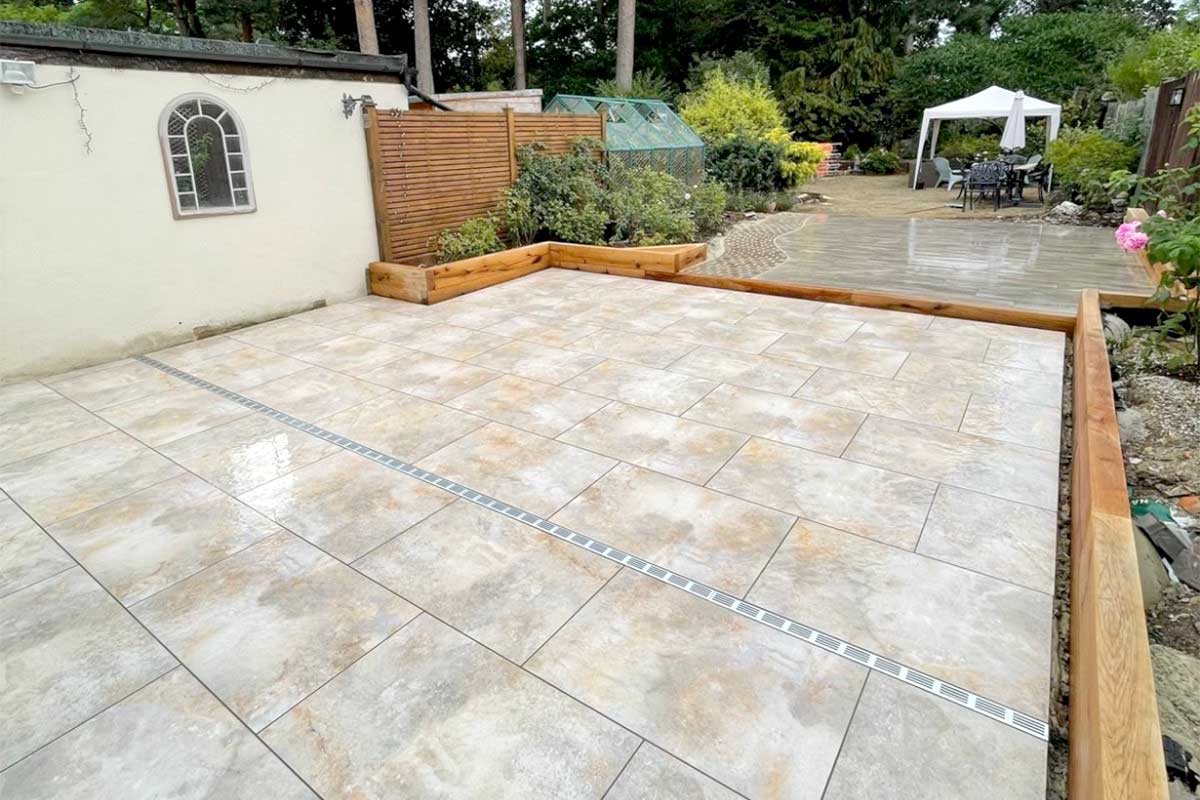
Porcelain paving has grown in popularity, particularly for modern homes and low-maintenance gardens. One of its main advantages is how easy it is to look after. As it is non-porous, porcelain does not absorb moisture or stains, so it doesn’t require sealing and is naturally resistant to algae and moss. In most cases, regular sweeping and occasional washing are enough to keep it looking its best.
Porcelain slabs also provide a more uniform finish than natural stone. Each slab is engineered to a consistent size and colour, with machine cut edges for a sleek, contemporary look. At Love Stone, we supply stone-effect slabs, concrete finishes and more in a variety of colours and textures.
It is also a highly durable material. Porcelain’s dense structure makes it resistant to scratching, fading and frost damage, allowing it to perform reliably in all weather conditions. This makes it particularly well suited to busy gardens and areas that see frequent use.
Drawbacks of porcelain paving slabs
The main disadvantage of porcelain paving is its lack of natural character. While modern printing techniques replicate the look of stone very effectively, it doesn’t have the same individuality as a quarried stone. As a result, its uniform appearance may feel less in keeping with established gardens, where the softer, more varied look of natural stone tends to work better.
Installing porcelain paving is also slightly more technical than working with natural stone. Because it is non-porous, each must be primed with a slurry primer (this is also beneficial when installing natural stone) to ensure a proper bond when laying. Its density also means specialist cutting tools are required, so you may need the help of a contractor. Natural stone, by comparison, is easier to work with and more DIY-friendly.
How much does natural stone and porcelain paving cost?
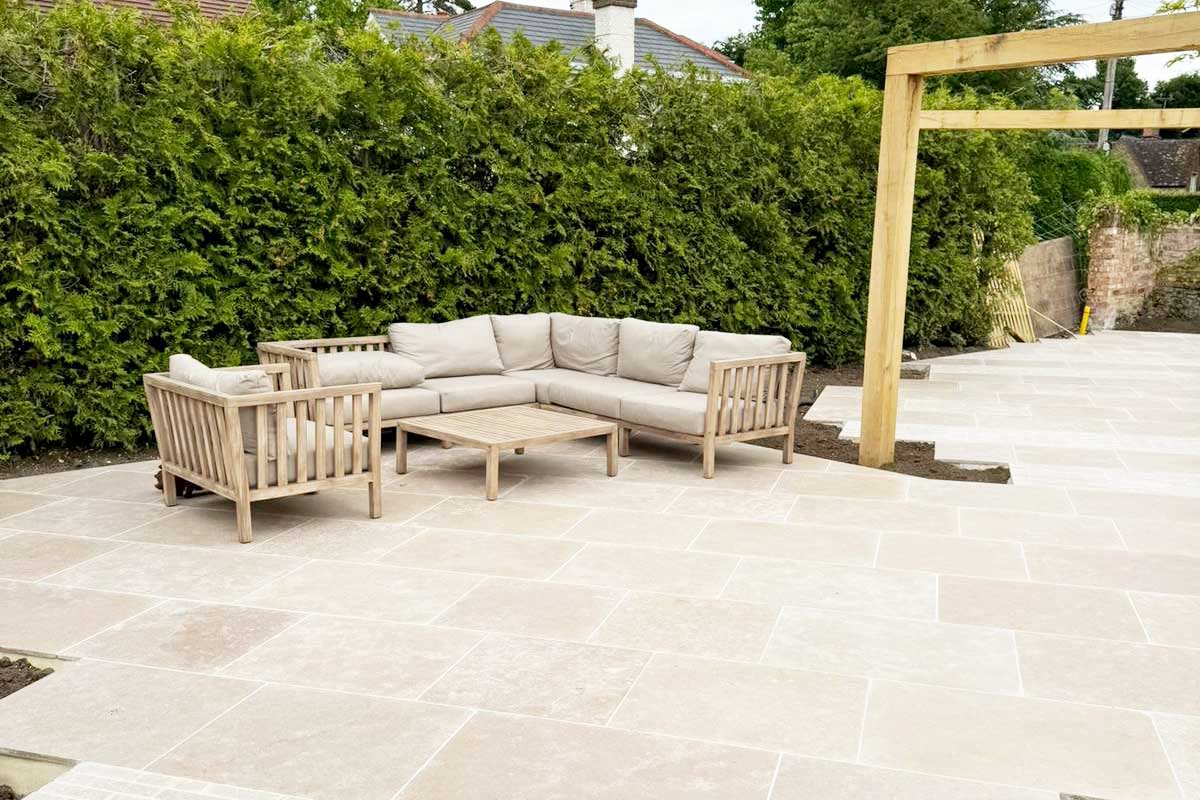
Porcelain paving was once a premium choice and cost significantly more than cheaper forms of natural stone. The increase in popularity of porcelain paving, combined with advances in manufacturing processes have seen prices come down in recent times. Porcelain paving is now comparative with many popular types of sandstone and limestone paving.
In terms of costs per square metre, at Love Stone our natural sandstone paving is priced from £30.48 including vat, and our limestone starts at £37.56 including vat. By comparison, our porcelain paving starts from £36.98 per square metre including vat. (prices correct May 2026)
Natural stone v Porcelain paving: What are the comparative installation costs?
It is difficult to give an accurate estimate of installation costs for natural stone and porcelain paving. This is because each patio will vary in complexity with these common factors affecting installation costs.
- Complexity of the patio design – more complex designs will require more cutting and time to lay.
- Local ground conditions – affecting sub-base construction and drainage requirements.
- Quality of the paving slabs – poor quality paving will be more difficult and time consuming to install and there will often be more wastage.
- Site access – restricted access may prevent the use of machinery, make removing waste from site more difficult, and increase labour costs.
- Waste removal – local waste disposal costs and the amount of material, including taking up old patios, that must be removed from site.
- Regional variations in material and labour costs.
Mybuilder.com suggests average installation costs for a patio range from £35 to over £100 per m2 depending on the material and complexity of the patio construction and design. In our experience, complex designs, raised construction, and difficult sites can significantly inflate installation costs. With such variations in circumstances and regional costs it is unrealistic for guides such as this to provide accurate general costs. An indication can only be provided by creating a cost example for an actual example patio.
Which type of paving option offers the best balance of cost and durability?
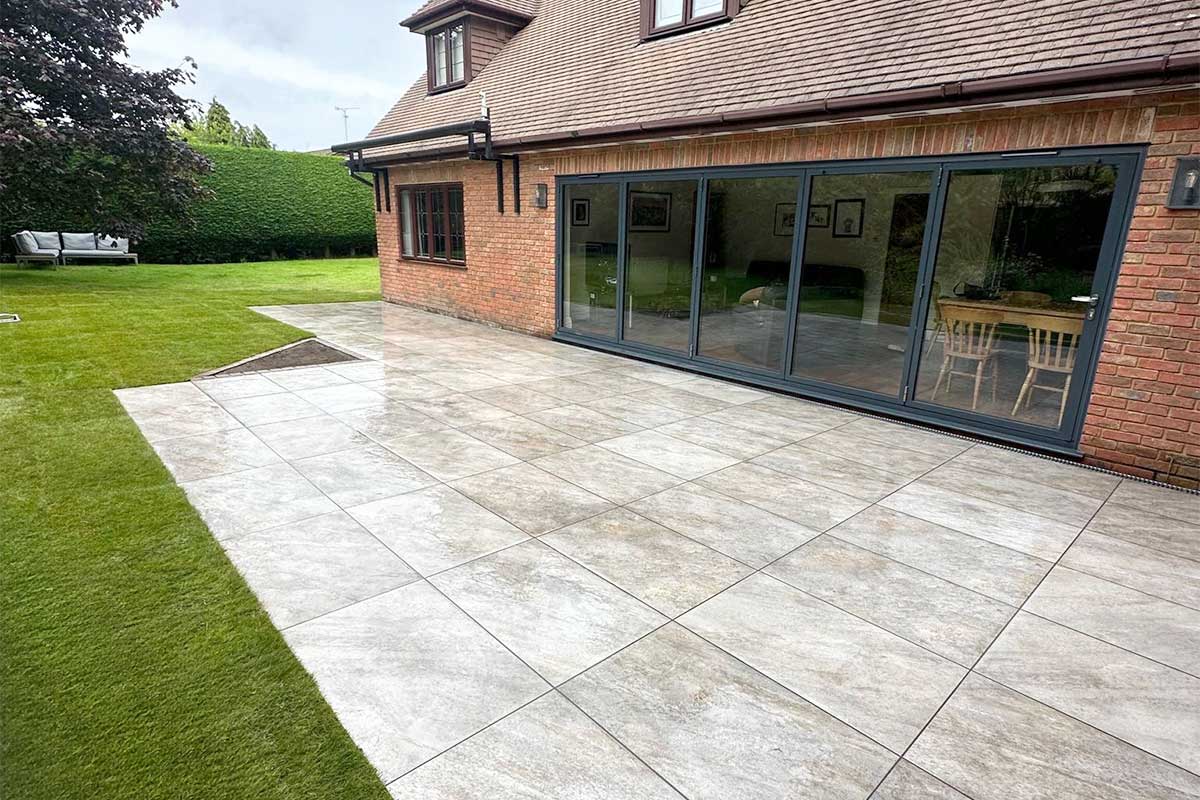
For many homeowners, the decision between natural stone v porcelain paving comes down to finding a balance between appearance, durability and price. Natural stone, particularly sandstone, is often seen as a good all-round option. It offers a combination of affordability, charm and long-term performance, making it a popular choice for those who want a natural finish without stretching their budget too far.
Porcelain paving, on the other hand, can provide better long-term value for some buyers. While it may have a higher upfront cost, its durability and low maintenance requirements can make it more cost-effective over time, especially in well-used gardens.
Ultimately, the best choice depends on what matters most to you – whether that’s achieving a particular look, reducing upkeep or working within a set budget.
See the natural stone and porcelain paving for yourself at Love Stone
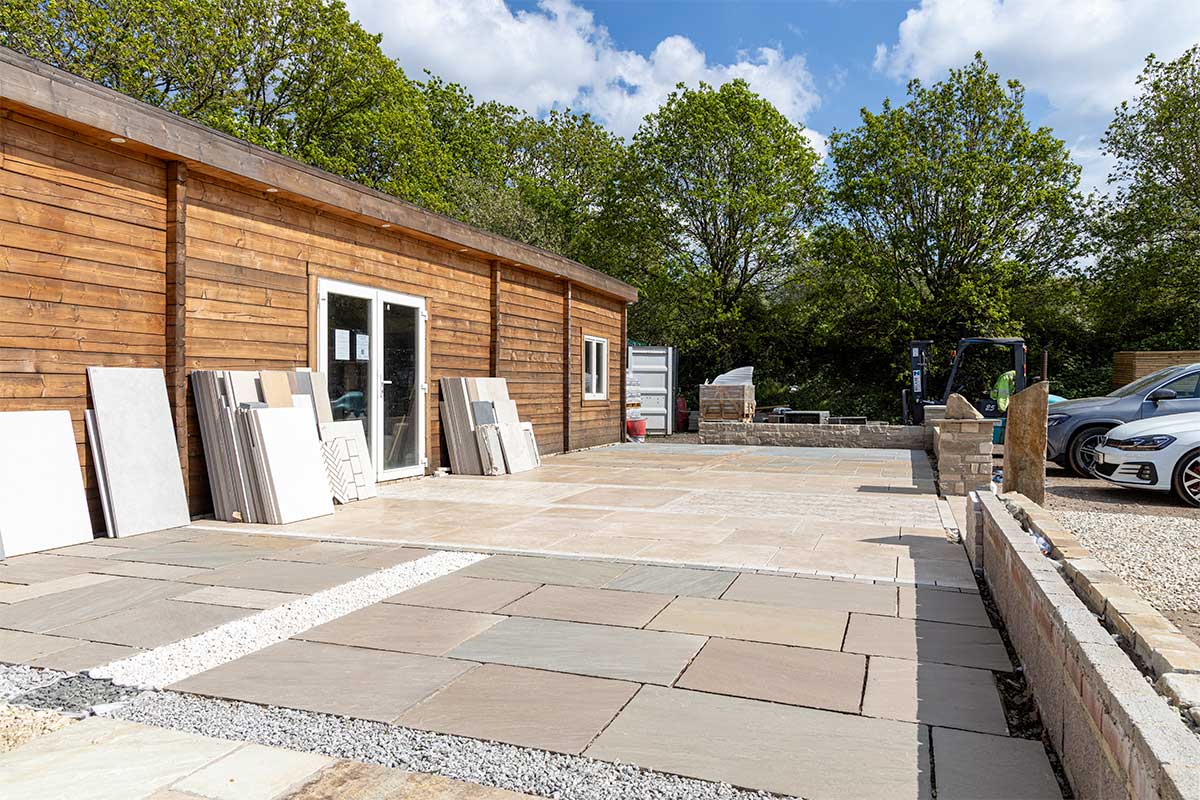
Choosing between natural stone vs porcelain paving isn’t always easy from photos or small samples alone. Seeing paving properly installed makes a big difference, helping you compare colours, textures and finishes in a more realistic setting.
At Love Stone in Ewshot, you can explore a wide range of natural stone and porcelain paving products installed and displayed side by side, along with edging stones, walling and decorative gravel. This makes it much easier to visualise how different materials, colours and finishes could look in your own garden.
If you are unsure which material is right for you, our team will be on hand to offer clear, practical advice. With a wide range of paving in stock and over 50 years of experience, we can help you compare options, work out quantities and choose the right products for your project.
Whether you are in the early planning stages or ready to buy paving slabs, visiting in person is the best way to get it right first time. You can find us at The Peacocks Garden Centre in Ewshot, open 8am to 4.30pm weekdays and Saturday mornings from 9am–1pm. We look forward to welcoming you!