


Limestone or Sandstone for a Patio? A Practical Buying Guide
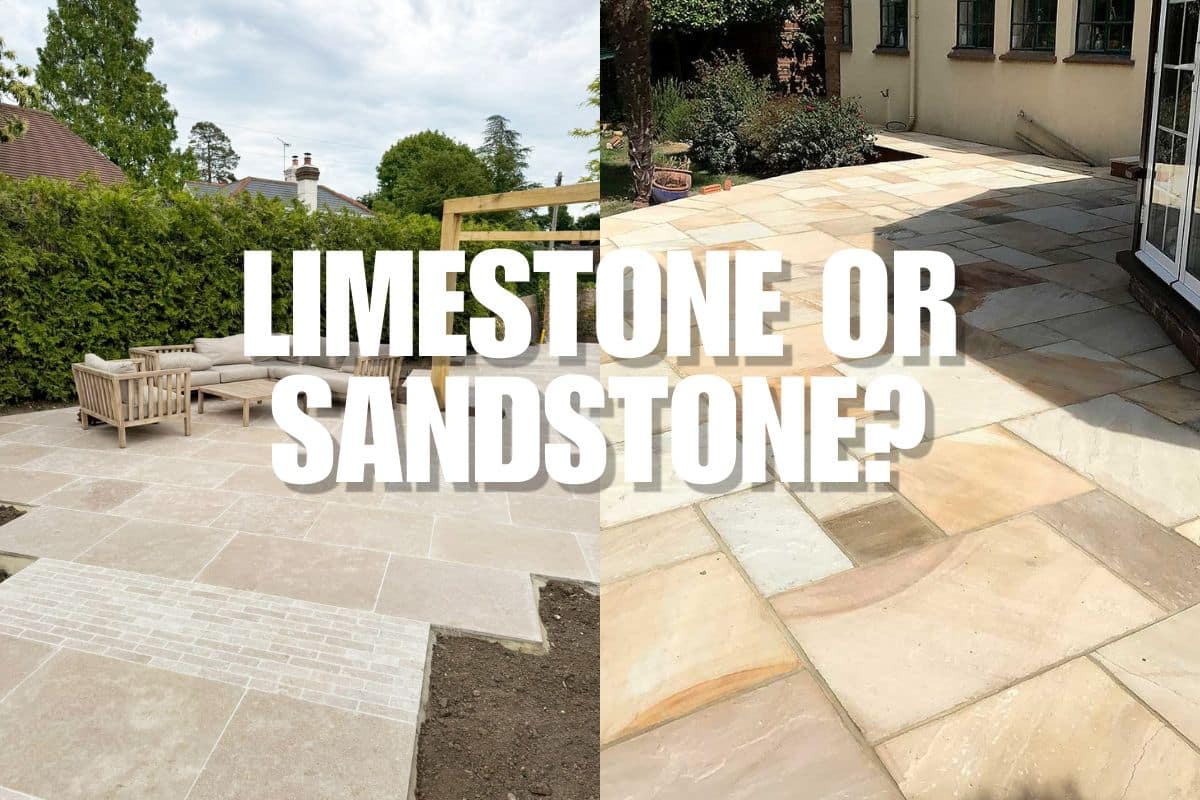
Choosing the right paving slabs can completely change the look and feel of your garden. Sandstone and limestone slabs are two of the most popular natural stone choices for patios and paths, with both offering durability and visual appeal. With that said, when comparing sandstone or limestone, each material is distinct and suits certain garden styles better than others.
Sandstone paving is often chosen for its natural variation, textured surface and traditional feel. Limestone paving, meanwhile, is known for its smoother finish, clean lines and more refined appearance, making it especially popular for contemporary gardens.
In short, there is no single best option for every project. The right choice depends on the look you want to create, the finish you prefer and how you plan to use your space. Read on as we explain the key differences to help you decide which paving is best suited to your patio.
What is the difference between sandstone and limestone paving?
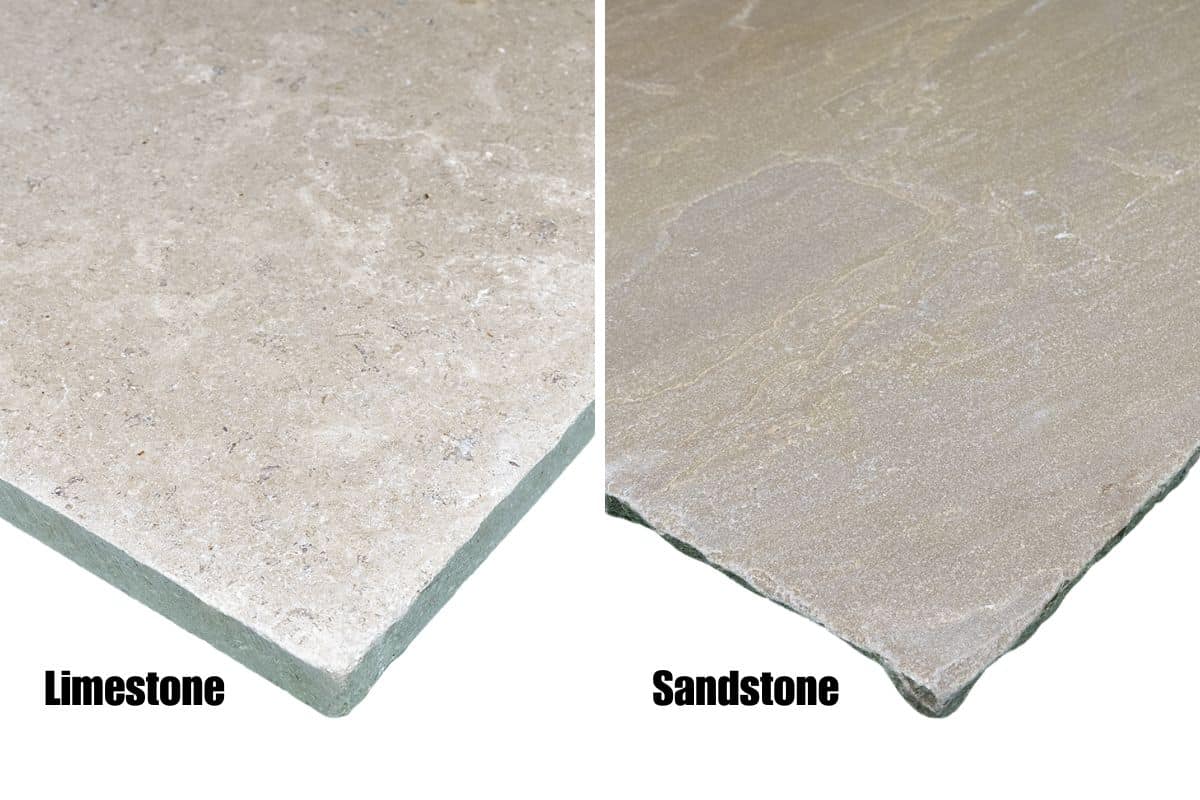
Either limestone or sandstone are a good choice for patios, paths and other garden landscaping projects. Both are hardwearing, weather-resistant and available in a variety of colours and finishes. The main differences come down to appearance, texture and overall character.
Most sandstone slabs have a naturally riven surface, which gives them a slightly more rustic and organic appearance. This makes sandstone well-suited to traditional gardens, cottage-style planting schemes and more relaxed outdoor spaces. Limestone paving generally has a more honed and less riven surface, provides a more refined finish and its colour is more consistent too. As such, limestone slabs provide a more uniform look which suits modern patios.
Both sandstone and limestone paving slabs perform well outdoors when correctly installed using the right sub-base and pointing materials. Limestone is UV-resistant so doesn’t fade as quickly in the sun and both limestone and sandstone provide good slip-resistance in wet weather.
Limestone or sandstone: which looks better?
When choosing between limestone or sandstone paving styles, appearance is usually one of the biggest deciding factors.
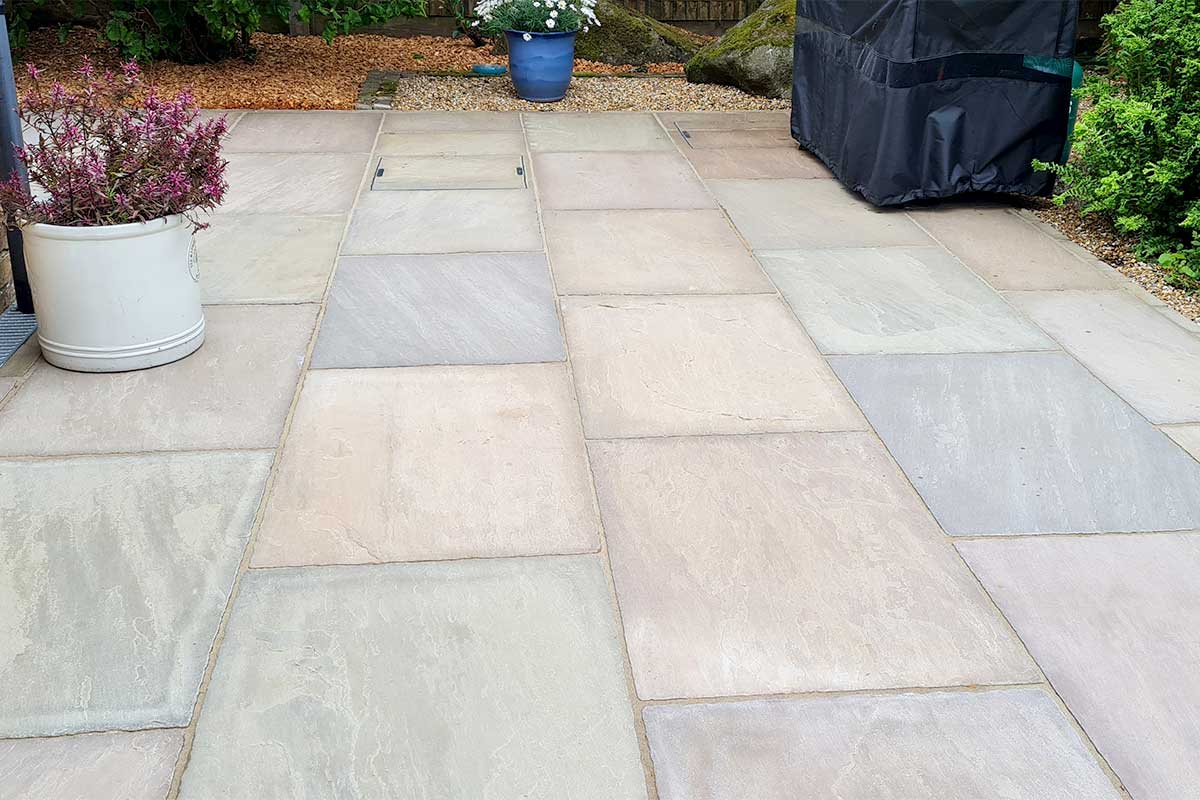
Sandstone paving is often chosen for its unique tonal variations. Colours include blends of buff, brown, grey and gold tones, with each slab featuring slightly different markings and shading. Popular options such as Indian York, Rippon Buff and Fossil Mint create a softer look that pairs well with traditional gardens and relaxed alfresco dining areas. This variation is part of sandstone’s appeal and helps patios blend naturally with planting and landscaping.
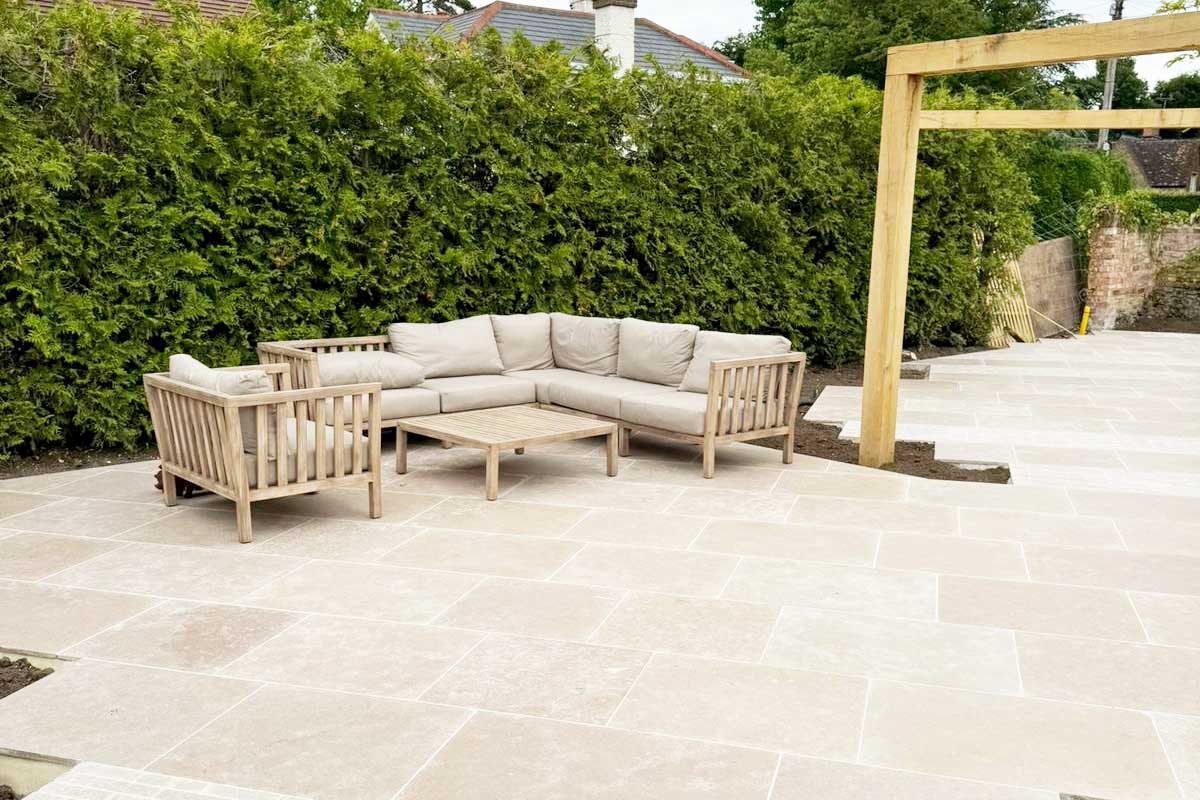
Limestone paving typically offers a cleaner and more consistent finish. Colours are more uniform across the surface, with grey, cream and pale sand tones especially popular for contemporary patio designs. Pearl River limestone, for example, features cooler mid-grey tones with subtle blue undertones for a modern, understated look. Meanwhile, Sinai Pearl features softer creamy shades that work equally well in traditional and contemporary gardens.
Overall, sandstone tends to feel warmer and more characterful, while limestone creates a sleek, contemporary feel. The choice simply comes down to the style you want to achieve.
Surface finish and feel underfoot
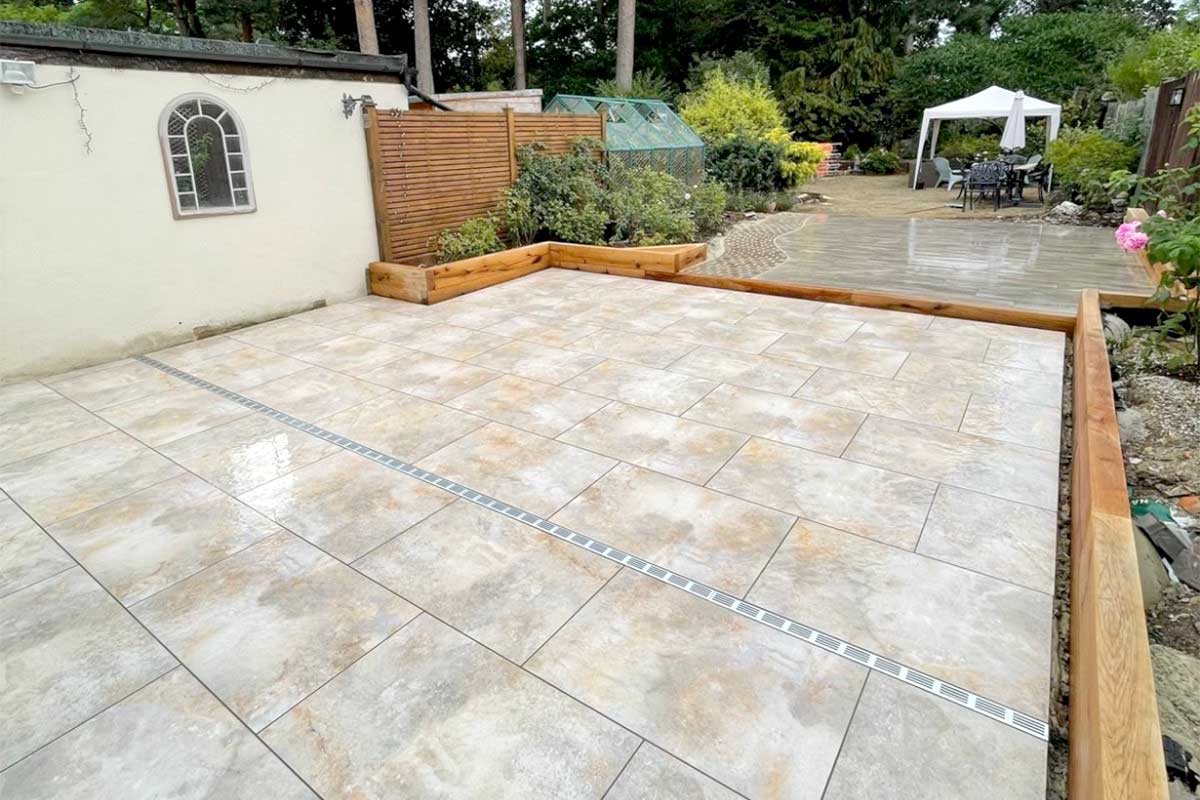
As well as affecting the appearance of your patio, the surface finish of your paving slabs also changes how they feel underfoot and how practical they are for everyday use.
Sandstone paving is commonly supplied with a naturally split or riven finish. The result is a textured surface with subtle ridges, giving patios a more lived-in feel. The texture also prevents slabs from becoming slippy when wet, making sandstone a good option for families. The downside of this is that the surface can feel slightly less even beneath patio furniture and dining sets. However, we do stock tumbled sandstone for a softer, smoother feel.
Limestone paving is typically flatter and smoother underfoot, making it a popular choice for outdoor dining areas and contemporary patios. Machine cut edges create cleaner joints and a more precise finish that is perfect for modern settings. However, this more uniform appearance may feel a bit too formal in some gardens.
With that said, limestone is not limited to contemporary spaces. Tumbled limestone slabs have softened edges and a slightly aged appearance that adds more warmth and character. And leathered finishes provide a lightly textured surface that still retains limestone’s refined look
Durability and performance
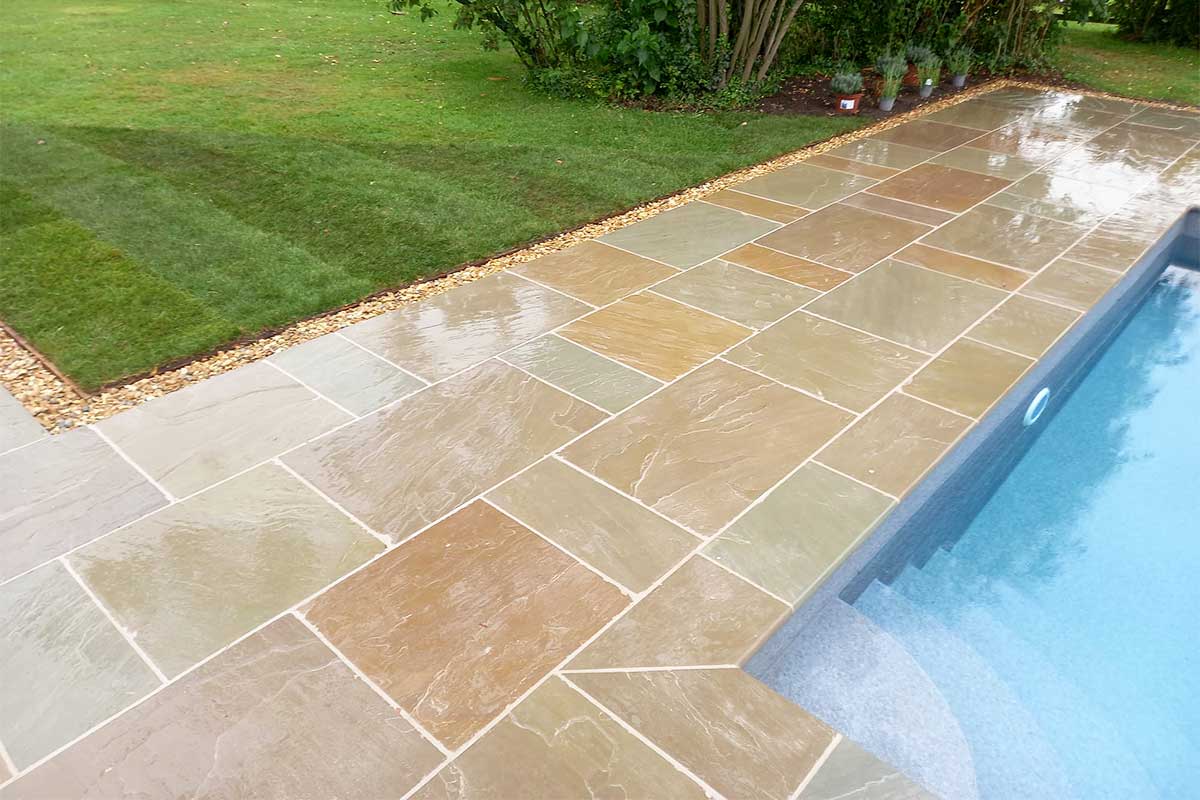
Limestone or sandstone paving slabs are suitable for UK gardens. Both are hardwearing and can last for many years when properly installed and maintained. In most cases, long-term performance depends just as much on the installation as the stone itself.
Limestone is generally denser than sandstone, meaning it absorbs slightly less water and dries more quickly after rain, making it less prone to cracking. It also resists surface wear well over time, however darker colours will show scratches slightly more.
Sandstone is also highly durable and quality Indian sandstone performs particularly well in changing conditions. Its naturally textured surface helps disguise minor marks and wear, allowing patios to age well. When properly installed and maintained, sandstone paving can last for decades and remains one of the most popular choices for patios and garden paths.
Whichever type of natural stone paving you choose, proper installation is key. A well-prepared sub-base, suitable drainage, quality pointing and the use of slurry primers all help create a stronger bond and improve the longevity of your paving.
Maintenance and sealing
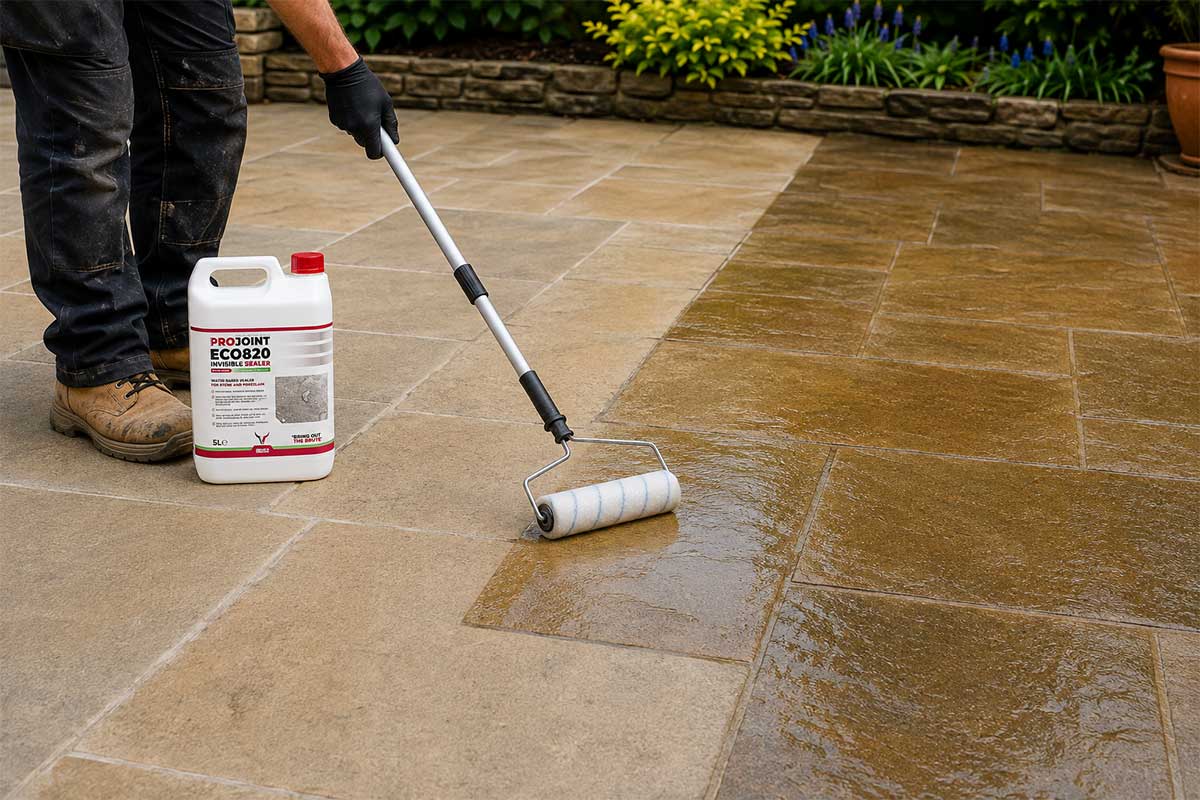
Whether you choose limestone or sandstone paving, sealing is highly recommended. Both materials are porous to some degree, meaning they can absorb moisture, dirt and stains without the right protection. This is especially important in high-traffic areas, shaded spots beneath trees and on patios used for barbecuing.
Sandstone is slightly more porous than limestone, so sealing is definitely worthwhile to help reduce water absorption, grease stains and weathering. However, both materials will benefit from a good quality penetrating sealant to protect against algae growth, frost damage and general wear over time. Invisible sealants are available or you could use a colour-enhancing sealant to deepen the stone’s natural colour.
Routine maintenance for both sandstone and limestone paving is relatively straightforward. Regular sweeping, occasional washing and keeping joints in good condition will help preserve the appearance of your patio for years to come.
Cost and value
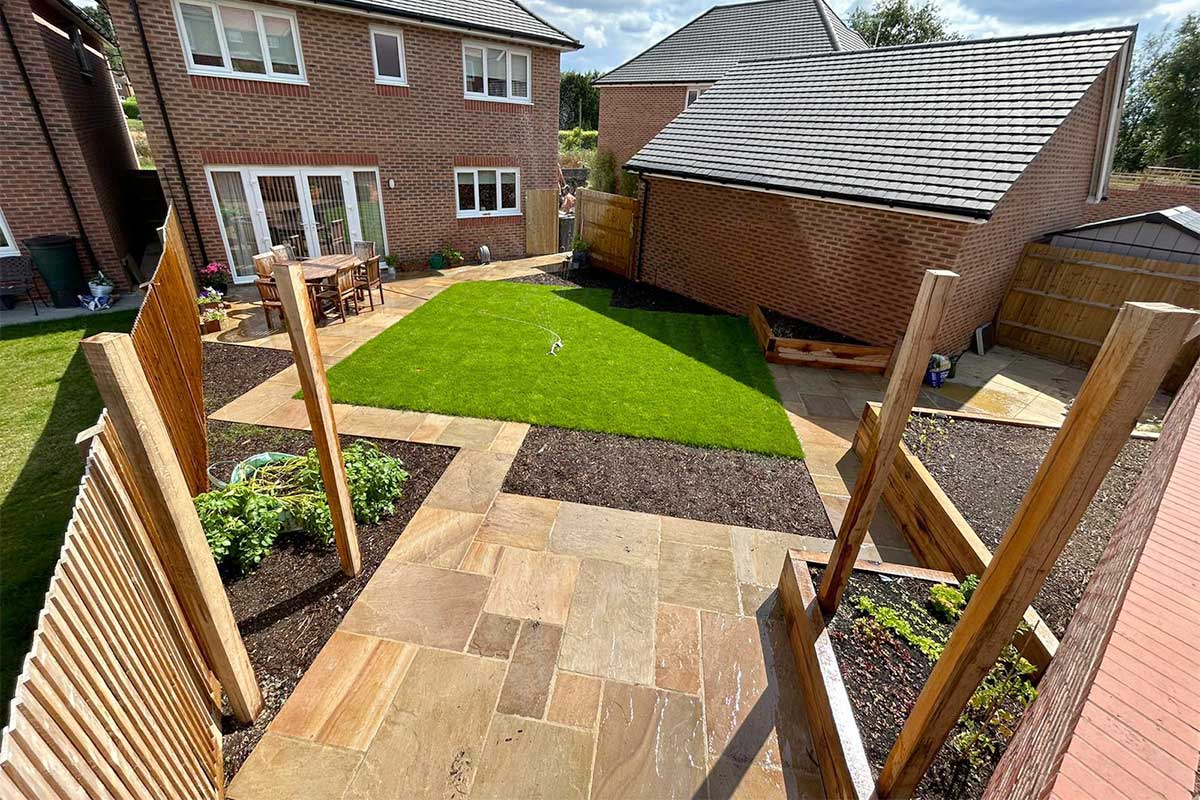
When considering limestone or sandstone for a patio, cost is another important consideration.
Sandstone is often viewed as the more budget-friendly option and is widely regarded as excellent value for money. It offers a broad choice of colours, finishes and styles, making it easier to achieve a natural stone patio without the high price tag.
Limestone can also offer good value, particularly for customers looking for a smoother and more refined finish. Pricing can vary depending on the finish, thickness, edge detailing and stone origin, especially for more processed styles such as honed or leathered limestone.
Rather than focusing only on slab price, it’s best to think about overall value. Remember to factor in aesthetics, durability and how well the patio will serve your needs in the long run.
Which paving is best for your garden style?
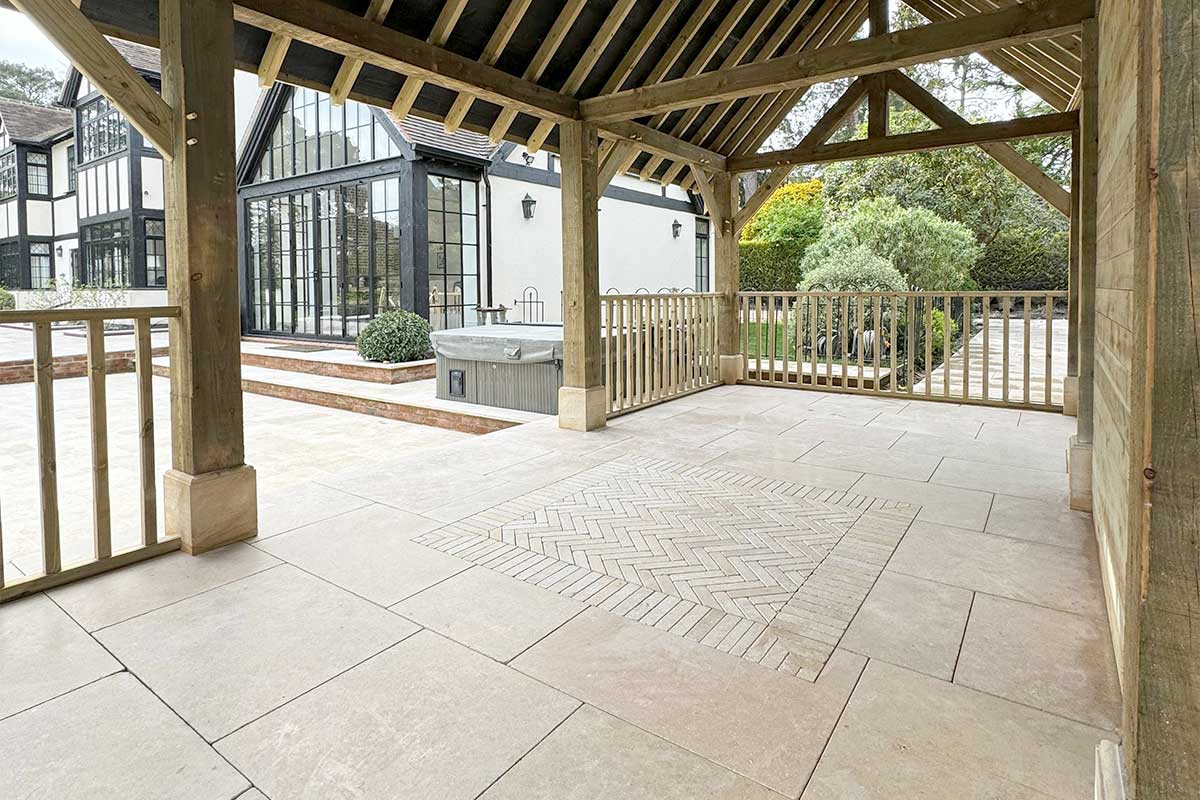
The best choice often comes down to the atmosphere you want to create in your garden. Sandstone paving is usually better suited to relaxed, characterful spaces with softer landscaping and a more traditional feel. Its tonal variation and texture help patios blend more naturally into established gardens and informal planting schemes.
Limestone paving, meanwhile, is often favoured for contemporary patios and more structured outdoor spaces. Its more consistent finish complements modern homes and minimalist planting schemes, creating a neat and more polished look overall.
Quick comparison: sandstone vs limestone paving
| Feature | Sandstone Paving | Limestone Paving |
|---|---|---|
| Best for | Traditional gardens | Contemporary spaces |
| Colouring | More natural variation | More consistent |
| Surface feel | Textured and riven | Flatter and smoother |
| Finish options | Natural split, tumbled | Machine cut, leathered, tumbled |
| Overall feel | Relaxed and organic | Sleek and structured |
Ultimately, the choice between limestone or sandstone paving will come down to personal preference and your practical needs.
Visit Love Stone to compare sandstone and limestone paving
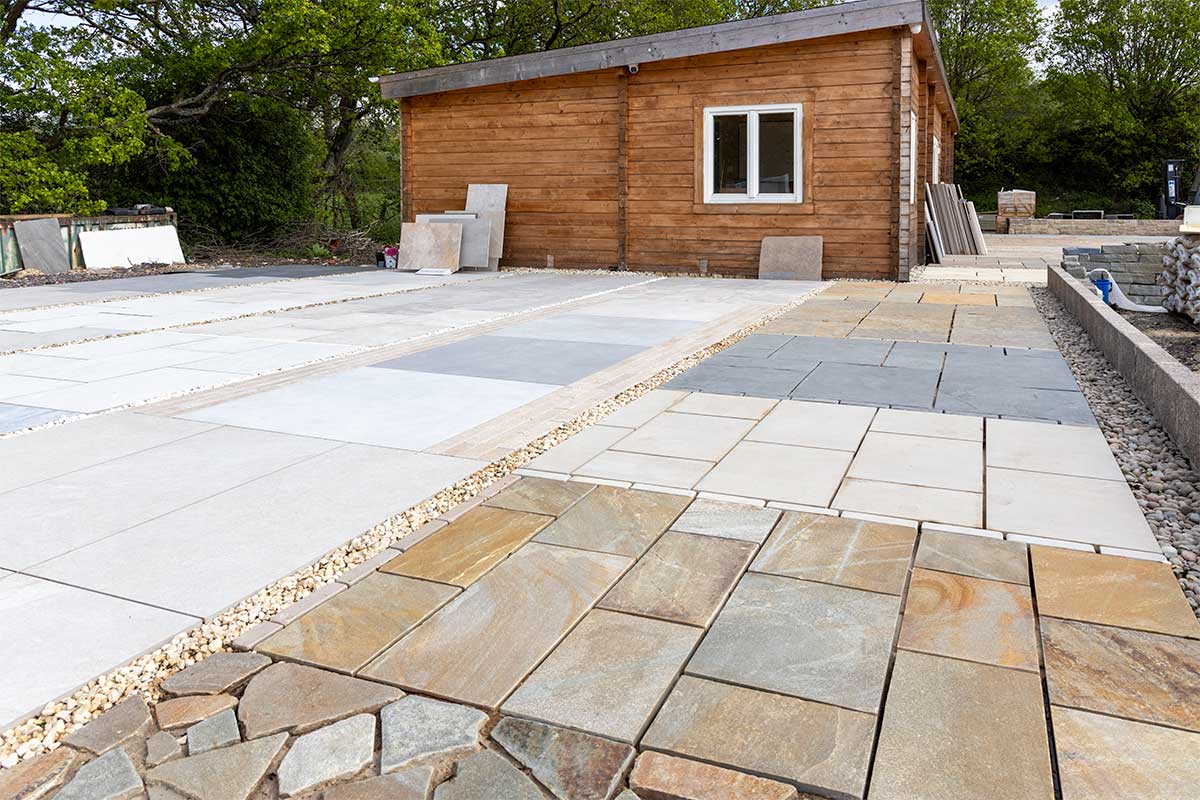
At Love Stone, we have a wide range of sandstone and limestone paving – both online and in-store. At our Ewshot showroom, you’ll find a 240m² display space featuring a variety of natural stone and porcelain paving installations to help you compare different styles side by side.
Whether you prefer the character and variation of Indian sandstone or the cleaner look of limestone paving, our team can provide practical advice on quantities and finishes. We can also recommend sealants and other complementary products to complete your patio project.
We’re open 6 days a week, or you can give us a call on 01252 705979 to discuss your needs.
FAQs - Limestone or Sandstone Paving?
Is sandstone cheaper than limestone paving?
In many cases, sandstone paving slabs are slightly cheaper than limestone slabs. But prices will vary according by stone type, thickness and quan requirements. Contact us for pricing.
Does sandstone need more maintenance than limestone?
Sandstone is generally slightly more porous than limestone, so sealing is especially beneficial. However, both materials require similar care and benefit from annual cleaning and resealing periodically.
Which is better for a modern patio?
Limestone slabs are often paired with newer homes and modern gardens because of their smoother surface and more uniform appearance. Cool grey and pale tones are popular choices and work well with modern home and gardens.
For an even more modern style of paving, consider porcelain slabs. Their uniform appearance is well suited to modern homes, and their low porosity means they do not need to be sealed and they are very easy to clean.
Which type of paving is better for traditional gardens?
Sandstone paving is good choice for traditional or rustic gardens thanks to its natural texture, warmer tones, colour variation and softer overall appearance.
Do sandstone and limestone both need sealing?
Yes. As with all natural stone products, both sandstone and limestone paving benefit from sealing. This will help protect the surface against moisture, staining, algae and frost damage.
Is sandstone or limestone better for patio furniture?
Both types of paving provide a good surface for garden furniture, but limestone tends to provide a flatter, more even surface. If your preference is for sandstone paving, tumbled, honed and brushed finishes provide a slightly flatter surface.
One Response